Feed the Scorchpot Island Layout
Buildings cannot move. Place them as if the dragon already scheduled the inspection.
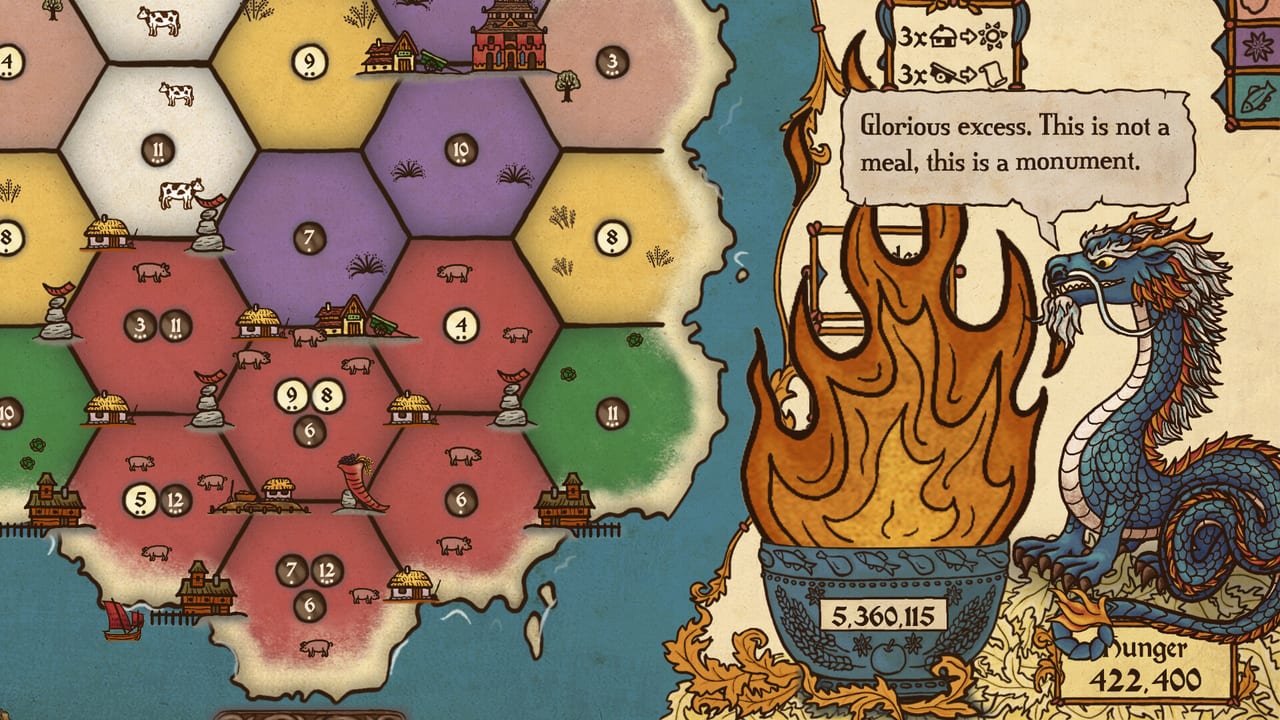
The island is a hex map with numbered resource tiles and a limited number of corners where buildings may sit. Feed the Scorchpot looks like a tabletop because it is one: you are drafting a Catan board that also has to feed a Balatro-style scoring engine. This page is only about geography. For dice, see How to Play. For multipliers, see Scoring Combos.
Corners, not centers
A building sits on an intersection. The best intersections touch three hexes. Those three hexes should share numbers you can produce with pairwise Marks. A farm that kisses 6, 8, and 9 on a tray that often rolls those sums is an engine part. A farm that kisses 2, 7, and 12 because the art lined up is a souvenir.
Count legal corners before you panic-buy a house. The game gives more placement rights as years pass. Early years are a privilege, not a race to pave the coast.
Roll, then stamp
The tutorial tells you to roll before placing new farms. Do it even after the tutorial ends. A seed’s tile numbers are random. Your first three seasons are a survey. If 10 never appears, do not dedicate a shrine to 10. If 8 appears constantly, stack farms on 8 even if the coastline looks lopsided.
Permanent placement is the hidden difficulty. Reviewers mention it because it is the main way skilled players beat lucky players. Lucky players drop buildings wherever a peasant would live. Skilled players wait one extra season and take the triple corner.
Cluster, then specialize
Light every copy of a number with one Mark. That rule rewards clusters. Three grain hexes with 8 on them plus farms on those corners is a grain engine. One of every food type is a grocery that no recipe can fully use.
Once a cluster exists, specialize:
- Farms on the cluster for Fodder.
- A shrine or harbor that sees those farms for the multiplier side.
- A trade post if you need recipe slots more than raw food.
- Dice later, so the cluster gets hit on purpose. See the dice Codex.
The buildings Codex lists what each structure wants from its neighbors. The buildings tier list is the short ranking; this page is the geometry behind that ranking.
Numbers 2 and 12 are traps until they are not
Snake eyes and boxcars are rare on fair dice. Putting your only farm on 2 is a meme. Putting a late-game all-sixes die next to a 12 cluster is a plan. Do not mix those ideas in year three.
The Mark Planner shows how many pairs create each total. 7 is common. 2 and 12 are not. Build common first. Exotic numbers are a second-run hobby once you own weird dice.
Leave breathing room
You will unlock more building slots. If you occupy every legal corner with low-tier houses, you cannot drop the tier-two structure the shop finally offered. Leave two good corners empty on purpose. They are future Essence, not wasted land.
Tantrums that scorch land disable harvests on those tiles for a year. A board that only works on one peninsula dies to one fire. A board with two modest clusters survives. The walkthrough tells you when to stop expanding and start defending.
A placement checklist
- Survey rolls for three seasons.
- Pick two numbers you actually hit.
- Find triple corners that touch those numbers.
- Place farms there, not on lonely coasts.
- Add one adjacency building that boosts those farms.
- Stop. Buy a recipe from Scoring Combos before you decorate.
If you already paved the wrong coast, the honest reset is a new run. The dishonest reset is spending every ducat trying to make 12s happen. The dragon does not grade effort.
When the geography is stable, go back to Getting Started only if a friend is onboarding. You should be in the walkthrough or the tier lists by now.
Frequently Asked Questions
Quick answers to the most common questions.
Where do I place farms?
On hex corners, ideally touching three tiles whose numbers you can form as Marks. Never in the center of a hex.
Can I relocate a shrine later?
No. Treat every building as permanent. Survey rolls before you stamp.
Should I cover every number from 2 to 12?
No. Cluster on two or three common totals. 7, 8, and 9 beat a thin layer on 2 and 12.
Why leave empty corners?
Later years grant more slots and better buildings. If every corner is a house, you cannot place the structure that actually scores.