How to Score Combos in Feed the Scorchpot
Recipes are not garnish. They are the only reason a harvest becomes a dragon-legal meal.
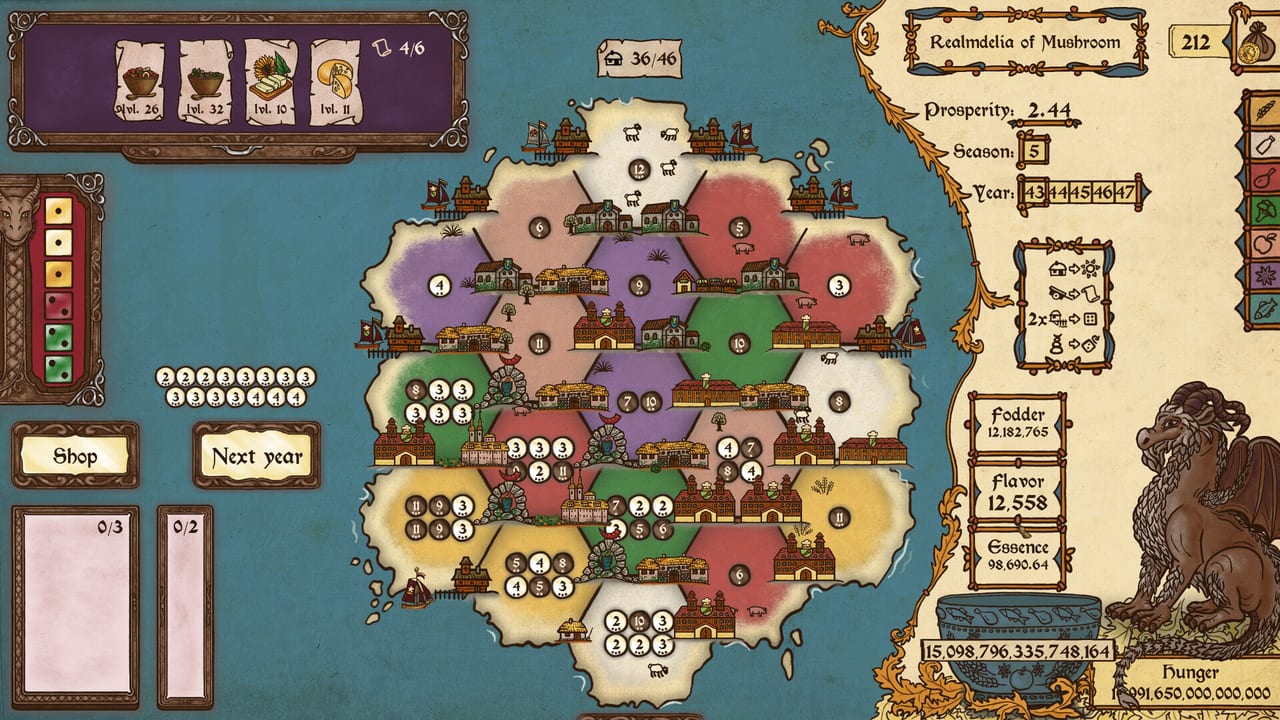
Feed the Scorchpot is a math puzzle wearing a cookbook. You grow Fodder on hexes, then multiply it with Flavor and Essence until the Scorchpot shakes. Miss the multipliers and a beautiful island still fails the contract. This page is the combo lesson. The sponsored run below, Avoiding Spices For Huge Scores, is a real playthrough that treats spices as a scoring choice rather than a default seasoning. Watch it in the middle of this article, then steal the habit: not every ingredient you can grow is an ingredient you should chase.
For the buttons behind a cook, see How to Play. For where buildings sit, see Island Layout. For names, see recipes and the recipes tier list.
The three numbers that matter
Fodder is the sum of harvested ingredients. Grain, meat, fish, fruit, dairy, and the weirder tiles all dump weight into that pile. More farms on live Marks means more Fodder. That is the Catan half of the game.
Flavor multiplies Fodder. Recipes are the main source. Some trade buildings drip Flavor even when you cook poorly. A cook without Flavor is a raw offering. The dragon notices.
Essence is the late multiplier. High-tier buildings and advanced recipes add it. You do not need Essence in year two. You will want a path to it by the back half of the walkthrough.
Think in products, not in piles. Doubling Flavor on a medium harvest beats adding one more farm on a number you roll twice a year.
Recipes are loadouts
A recipe is a legal transform: pay these ingredients (and sometimes infrastructure), gain this Flavor or Essence. The shop sells them as random cards. Lucky synergies feel like Balatro because they are: one matching recipe turns a board from survival into a screenshot.
Buy rules:
- Match the food you already grow. Do not rebuild the island around a recipe you might see once.
- Prefer recipes that scale with volume over recipes that want a rare tile you placed once for flavor text.
- Leave a slot free. A locked-in bad recipe is a tax.
- When a year is about to scorch the shop, buy the matching recipe even if the gold hurt.
The spice-avoidance video is useful even if your seed has no spice tile. The lesson is negative space: some tags look like scoring and actually dilute the multiplier you already have. If a recipe wants a garnish that forces you off your best Marks, skip it.
Buildings as scoring parts
Farms create Fodder. Shrines, harbors, and trade posts change the multiplier side: extra Flavor, extra recipe slots, extra dice, extra ducats to buy the next card. Adjacency is not decoration. A harbor that sees two farms and a shrine is a different object from a harbor on a lonely coast. Rank them on the buildings tier list, but always through the lens of your current recipe.
Tools and artifacts spike a single cook. Reviewers mention effects like temporarily doubling recipe power. Those are not a plan. They are how you beat a tantrum year. Keep one. Spend one. See shop tools.
Dice as scoring parts
Odd, even, colored, and all-sixes dice exist to make your Marks less fair and more intentional. If your engine lives on 8-9-10, an even-biased tray is a scoring item. If you sprinkled farms on 2 and 12, no die will save you. Tune the tray after the board, not before. The dice tier list assumes you already picked a cluster.
A simple combo checklist
- Name the ingredient you grow most.
- Name the recipe that pays for that ingredient.
- Name the two Marks that light those tiles most often.
- Put farms on those corners only.
- Buy the die that prints those Marks.
- Cook. Then spend ducats on the next multiplier, not a fourth food type.
If you cannot name those six things, you do not have a combo. You have a village. Villages get eaten.
When the math is clear, return to the walkthrough and apply it under rising hunger. When you want to test a tray, open Dice Odds.
Frequently Asked Questions
Quick answers to the most common questions.
What is the difference between Fodder and Flavor?
Fodder is raw harvest weight. Flavor is the multiplier recipes apply so the dragon treats that weight as a meal.
Should I always take spices or rare ingredients?
No. If they pull farms off your best Marks or dilute a recipe you already run, skip them. The huge-score habit is focus, not a full pantry.
When do I need Essence?
Once the mid-contract quota outruns Flavor-only cooks. Path toward high-tier buildings and advanced recipes by years 10-12.
Why did my score stay small with many farms?
You added Fodder without multipliers. Buy a matching recipe and adjacency buildings before you stamp another house.