Getting Started in Feed the Scorchpot
Learn the dinner contract before you spend ducats on a pretty island you cannot move.
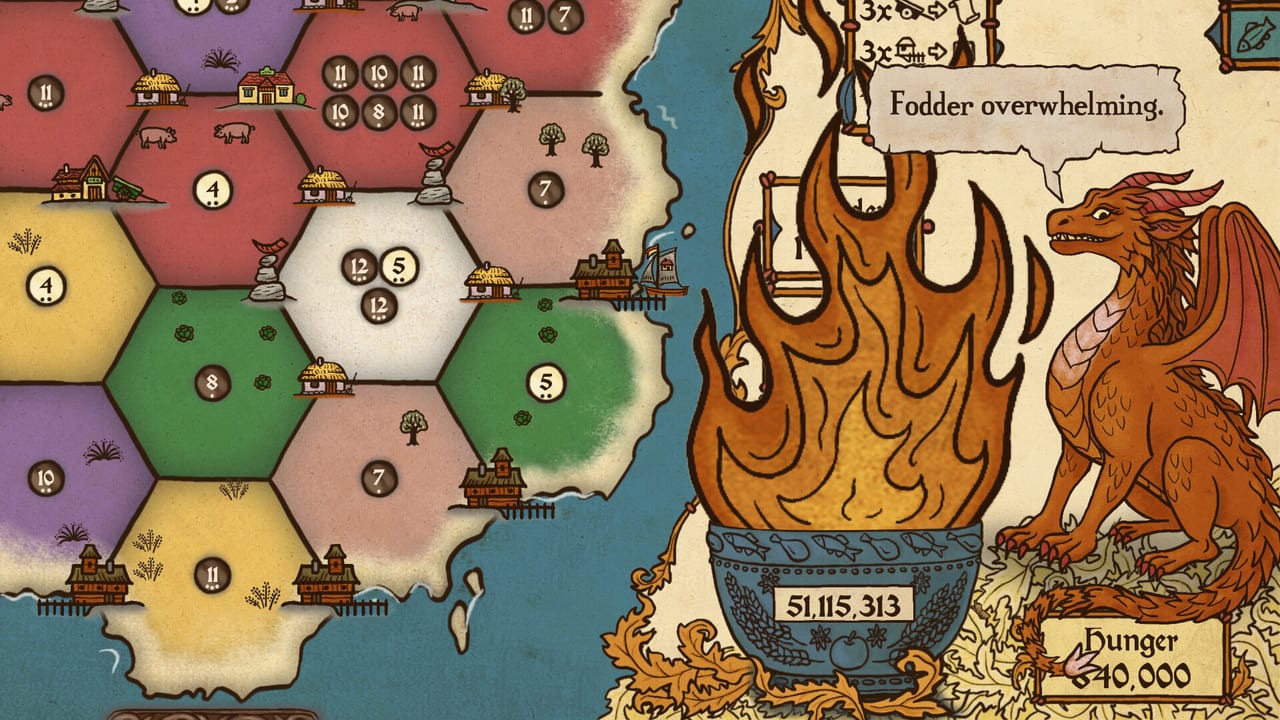
Feed the Scorchpot is a single-player dice roguelike about a bad rental agreement. A dragon protects your island for twenty years. You cook one serious meal each year. Miss the quota and the village is the next course. The Steam and itch.io release is out now; the free demo still exists if you want a shorter taste of the same loop.
This page is the first-hour briefing. For the exact dice math, continue to How to Play. For a year-by-year plan, use the 20-Year Walkthrough.
The deal in plain language
You are not exploring a dungeon. You are running a hex-grid island that must produce food. Each year has seasons. In a season you roll fate dice, form Marks, harvest tiles those Marks light, then cook. After the year settles you collect ducats, visit the shop, and the dragon wakes hungrier.
The tutorial dragon (the dread Baron in the voiced intro) is smug on purpose. The tone is a joke. The hunger curve is not. Early years forgive sloppy boards. Later years ask for multipliers you did not buy because you spent gold on a third house.
Fodder, Flavor, and Essence
Harvested tiles dump ingredients into Fodder, the raw weight of the meal. Fodder alone will not keep the contract. Flavor is the main multiplier and mostly comes from recipes, with some help from trade buildings. Essence is the rarer multiplier from higher-tier buildings and advanced recipes. The cook button cashes the pile: Fodder times those multipliers.
If year one feels easy, that is the trap. You can feed the dragon on almost-raw food once. You cannot do it when the quota has doubled and your farms still sit on a single hex.
Your first buildings
Buildings go on the corners where hexes meet, not in the center of a tile. A well-placed farm can touch three resource hexes. A poorly placed farm touches one and looks tidy. You cannot pick it up later, so treat every placement as permanent infrastructure.
The tutorial suggests rolling before you stamp new farms. Listen. If you lock houses onto 6 and 8 because those numbers look friendly, then spend the rest of the run fishing for 6 and 8, you have built a shrine to one probability instead of a scoring engine. Read Island Layout before you fill every legal corner in year two.
Farms collect. Houses and other structures add dice, extra recipe slots, ducats, or passive Flavor. Shrines and harbors (the store page names the trio for a reason) change how adjacent tiles pay. The buildings Codex lists roles; the buildings tier list ranks what to buy when the shop is mean.
The shop is part of the board
The shop is available during the year, not only at a separate intermission, unless a tantrum scorches it. Recipes appear there as random offers. Tools are consumables: extra Marks, tile conversions, panic buttons. Artifacts and unusual dice reshape the tray. Ducats come from leftover harvest value and from buildings that print gold each year.
New cooks overbuy buildings and underbuy recipes. Reverse that. One recipe that matches the food you already grow is worth more than a fourth farm on a dead number. Scoring Combos walks through that math. Shop tools names the consumable habits that save a year you were about to lose.
What year one should look like
Finish the tutorial. Play the three seeded demo-style runs if you still have the demo installed; they exist to prove the loop, not to be a campaign. In the full game, year one is for:
- Learning which hex numbers you actually roll.
- Placing one or two farms on triple corners.
- Buying a recipe that matches grain, fish, fruit, meat, or dairy you already see on the island.
- Keeping a tool in the pocket instead of spending every ducat.
You do not need a broken combo in year one. You need a board that can grow. The Dice Odds widget helps you see Marks before Harvest. Controls covers mouse-only play, controller support, and the fact that you can pause and save.
After the first death
You will die. The game wants you to tear the island down and rebuild, sometimes while it is on fire. Unlockable dragons, starting dice, and harder difficulties exist behind trophies and the Codex; reviewers noted you can unlock everything from the menu if you would rather study than grind. Either path is valid. Just do not confuse a high Fodder pile with a cooked meal.
When you are ready, jump to How to Play for Marks, then Scoring Combos for the multipliers that make late years possible.
Frequently Asked Questions
Quick answers to the most common questions.
Can I move a building after I place it?
No. Placement is permanent. Roll first, then drop farms on corners that touch the numbers you can actually hit.
Why did the dragon reject a huge pile of food?
Raw Fodder is weight, not a meal. You need Flavor from recipes, and later Essence, to multiply that weight.
Is Feed the Scorchpot single-player?
Yes. There is no extra-player mode. Compare scores and the 40 Steam achievements if you want a social hook.
Should I play the demo first?
If you are unsure, yes. The demo includes the tutorial and a few seeded runs with the same harvest loop as the full twenty-year contract.