Feed the Scorchpot Review
Hand-drawn warmth on top. A picky dragon underneath. Worth the dinner shift if you like numbers.
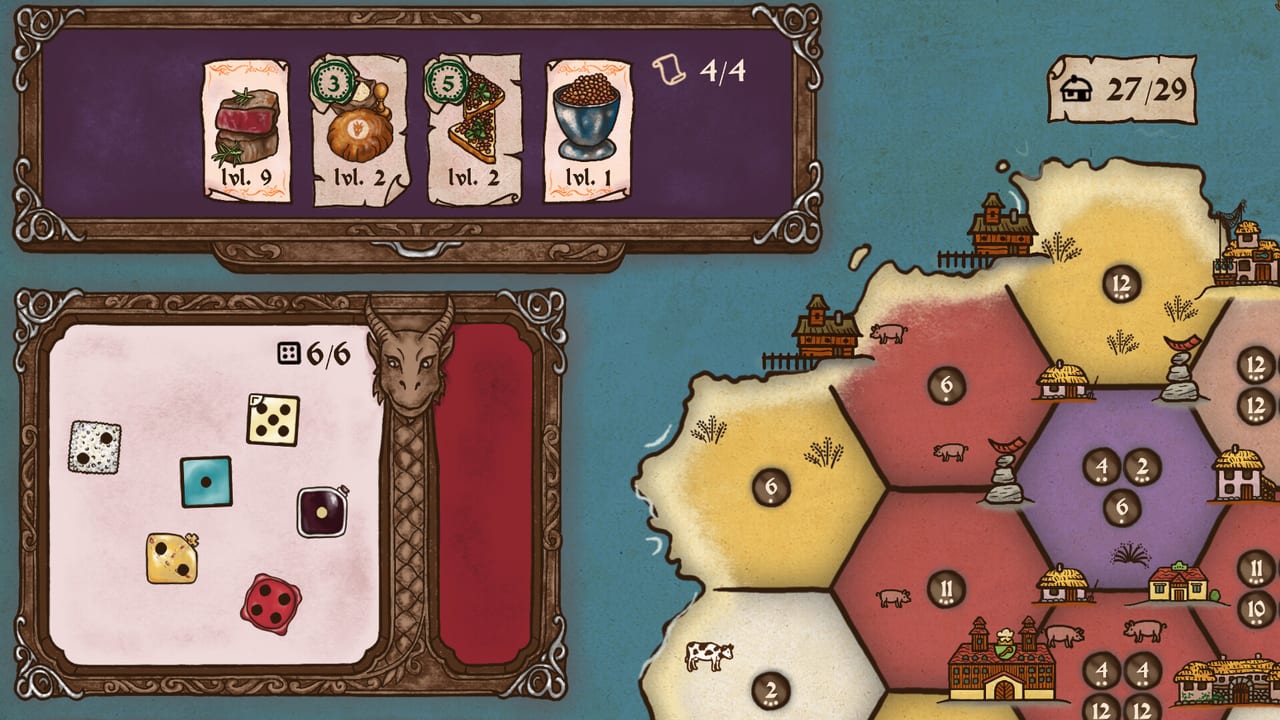
Feed the Scorchpot is out now. It is a single-player dice roguelike about feeding a dragon for twenty years, built by Moravian (Jakub and Daniela) and published by Indieformer with WhisperGames. The release-date trailer below is the pitch: a medieval farm, one tenant who matters, and a contract you should have read.
This is a fan review informed by the public build’s rules, Steam’s 100% positive slice at launch, and press scores around 8.5-9 from GameGrin and GamesHedge. It is not a lab test of every seed.
What it feels like
You roll, you harvest, you cook. The art is illuminated-manuscript meets kitchen fire. The music is medieval and calm. The dragon’s tutorial voice is the right kind of smug. Then the hunger curve arrives and the calm was a lie you enjoyed.
Comparisons to Catan and Balatro are fair and also incomplete. Catan is the geography: hexes, numbers, corners you cannot unscrew. Balatro is the product: multipliers that turn a legal meal into a screenshot. Yahtzee is the tray. The mix is the point. If you only want one of those games, you will bounce in year six.
What it does well
The loop is readable by the first year and deep by the tenth. Permanent placement makes skill matter. Recipes make shop luck matter without turning the game into a collectathon. The Codex, trophies, and the option to unlock content without grinding are grown-up concessions. Petting the dragon is silly and correct.
It is also light on a machine. See system requirements. You can think. There is no timer. Full controller support is listed. Steam Cloud is listed. For a debut from a two-person team, the feature list is unusually kind.
What will annoy you
Shop randomness can starve a run of the one matching recipe. Tantrums that close the shop punish window-shopping. Late years ask for Essence you postponed because houses looked cute. If you hate run-based failure, a dragon eating your village will not feel charming the fourth time.
The wiki’s own walkthrough exists because the back half is a boss. The scoring page exists because Fodder piles fool people. This is not a hidden-number complaint. The game tells you. Players still ignore it.
Who should buy it
Buy it if you like engine builders, dice, and short-session roguelikes that secretly eat an evening. Buy it if the demo’s three seeded runs already made you say “one more year.” Skip it if you wanted an action RPG, a shared kitchen campaign, or a live-service code list. There is no extra-player mode. There are no codes. There is a pot.
Price at launch was fifteen dollars with a discount. That is correct for the scope. The Balatro bundle is a personality test.
How this wiki fits
After you buy, Getting Started and How to Play are the onboarding. Island Layout stops permanent mistakes. Tier lists and items are the Codex with opinions. Dice Odds is the arithmetic tutor.
If you only wanted a verdict: cook. The dragon is mean, the art is lovely, and the math is the meal. Official storefronts sit on the Links Hub. Launch context sits on Updates.
Score, length, and the honest comparison
GameGrin landed near 8.5. GamesHedge near 9. Steam’s tiny launch sample was glowing. Treat those as “the loop works,” not as a promise that your twelfth death will feel fair. RPGamer’s write-up is the one that admits the game can eat hours while you tell yourself it is just one more year. That is the review that matches how the demo already behaved.
Compared with Balatro, you cannot rearrange the island like a Joker loadout. Placement is glue. Compared with a heavy Euro board game, the random shop is ruder. Compared with a cozy cooking sim, the fail state is literal. If you want all three flavors in one executable, this is the debut to buy. If you wanted Stardew with a dragon skin, the quota will feel like a trick.
I would play another contract. I would not pretend the shop always loves me. That is the whole score.
Frequently Asked Questions
Quick answers to the most common questions.
Is Feed the Scorchpot worth buying?
Yes if you like dice engine-builders. The launch loop is complete, the art is distinctive, and the hunger curve has teeth.
Is it cozy or stressful?
Both. Presentation is cozy. Late years are a quota boss. That contrast is the design.
Does it have multiplayer?
No. Single-player only.
How long is a run?
A successful contract is twenty years of seasons. Demo sessions already ran long; 1.0 can eat an evening if you linger for score.